Research record

Publications

Peer-reviewed articles, books, and theses in computational condensed matter physics, quantum chemistry, and exascale computing.

Publications
23
As first author
12
Co-authors
63
Journals & venues
17

23 publications

2026

1 publication

ArticlePreprint

Spin-Polarized Electronic Structure and Chemical Bonding Data for 2,500+ Halide Double Perovskites

arXiv preprint arXiv:2606.119282026

Luc Walterbos, Alex McEwan, Ravindra Shinde, Janine George, Linn Leppert

Halide double perovskites (A2BB'X6) are a long-known class of materials that has recently been rediscovered for diverse applications, including photovoltaics, photocatalysis, and radiation detection. Here, we present the first comprehensive database of spin-polarised electronic-structure data for all halide double perovskites predicted to be stable by the recently introduced τ tolerance factor. The dataset focuses on the Cs2BB'X6 family (X = I, Br, Cl, F) and includes density of states for over 2,500 compounds calculated using hybrid-functional density functional theory, with chemical-bonding analysis using LOBSTER.

2025

2 publications

Article

Reproducibility of fixed-node diffusion Monte Carlo across diverse community codes: The case of water–methane dimer

The Journal of Chemical Physics2025

Flaviano Della Pia, Benjamin X. Shi, Yasmine S. Al-Hamdani, Dario Alfè, Tyler A. Anderson, …, Ravindra Shinde, …, Andrea Zen

Show all 33 authorsShow fewer authors

Flaviano Della Pia, Benjamin X. Shi, Yasmine S. Al-Hamdani, Dario Alfè, Tyler A. Anderson, Matteo Barborini, Anouar Benali, Michele Casula, Neil D. Drummond, Matúš Dubecký, Claudia Filippi, Paul R. C. Kent, Jaron T. Krogel, Pablo López Ríos, Arne Lüchow, Ye Luo, Angelos Michaelides, Lubos Mitas, Kosuke Nakano, Richard J. Needs, Manolo C. Per, Anthony Scemama, Jil Schultze, Ravindra Shinde, Emiel Slootman, Sandro Sorella, Alexandre Tkatchenko, Mike Towler, Cyrus J. Umrigar, Lucas K. Wagner, William A. Wheeler, Haihan Zhou, Andrea Zen

Fixed-node diffusion quantum Monte Carlo (FN-DMC) is a widely-trusted many-body method for solving the Schrödinger equation, known for its reliable predictions of material and molecular properties. In this community-wide effort assessing reproducibility across eleven FN-DMC codes using the water-methane dimer, we demonstrate that reliable and reproducible predictions are achieved by employing the T-move (TM), determinant locality approximation (DLA), or determinant T-move (DTM) schemes, establishing the robustness and maturity of FN-DMC as a gold standard in computational science.

ArticleFirst author

Shifting sands of hardware and software in exascale quantum mechanical simulations

Nature Reviews Physics2025

Ravindra Shinde, Claudia Filippi, Anthony Scemama, William Jalby

The era of exascale computing presents both exciting opportunities and unique challenges for quantum mechanical simulations. Although the transition from petaflops to exascale computing has been marked by a steady increase in computational power, it is accompanied by a shift towards heterogeneous architectures, with graphical processing units (GPUs) in particular gaining a dominant role. The exascale era, therefore, demands a fundamental shift in software development strategies. This Perspective examines the changing landscape of hardware and software for exascale computing, highlighting the limitations of traditional algorithms and software implementations in light of the increasing use of heterogeneous architectures in high-end systems.

2024

1 publication

Article

Accurate Quantum Monte Carlo Forces for Machine-Learned Force Fields: Ethanol as a Benchmark

Journal of Chemical Theory and Computation2024

Emiel Slootman, Igor Poltavsky, Ravindra Shinde, Jacopo Cocomello, Saverio Moroni, Alexandre Tkatchenko, Claudia Filippi

Quantum Monte Carlo (QMC) is a powerful method to calculate accurate energies and forces for molecular systems. In this work, we demonstrate how we can obtain accurate QMC forces for the fluxional ethanol molecule at room temperature by using either multideterminant Jastrow-Slater wave functions in variational Monte Carlo or just a single determinant in diffusion Monte Carlo. The excellent performance of our protocols is assessed against high-level coupled cluster calculations on a diverse set of representative configurations of the system. Finally, we train machine-learning force fields on the QMC forces and compare them to models trained on coupled cluster reference data, showing that a force field based on the diffusion Monte Carlo forces with a single determinant can faithfully reproduce coupled cluster power spectra in molecular dynamics simulations.

2023

1 publication

Article

TREXIO: A file format and library for quantum chemistry

The Journal of Chemical Physics2023

Evgeny Posenitskiy, Vijay Gopal Chilkuri, Abdallah Ammar, Michał Hapka, Katarzyna Pernal, Ravindra Shinde, …, Anthony Scemama

Show all 16 authorsShow fewer authors

Evgeny Posenitskiy, Vijay Gopal Chilkuri, Abdallah Ammar, Michał Hapka, Katarzyna Pernal, Ravindra Shinde, Edgar Josué Landinez Borda, Claudia Filippi, Kosuke Nakano, Otto Kohulák, Sandro Sorella, Pablo de Oliveira Castro, William Jalby, Pablo López Ríos, Ali Alavi, Anthony Scemama

TREXIO is an open-source file format and library developed for the storage and manipulation of data produced by quantum chemistry calculations. It provides a reliable and efficient method of storing and exchanging wave function parameters and matrix elements, consisting of a front-end implemented in C with text and HDF5 binary back-ends, along with interfaces for Fortran, Python, and OCaml.

2021

2 publications

ArticleFeatured

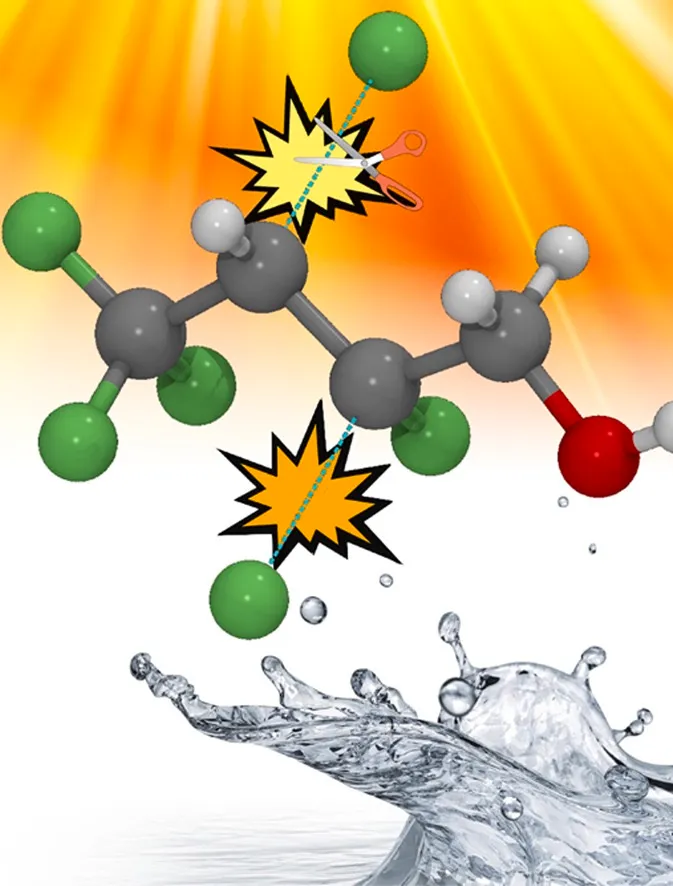
Photo-induced degradation of PFASs: Excited-state mechanisms from real-time time-dependent density functional theory

Journal of Hazardous Materials2021

Sharma Yamijala, Ravindra Shinde, Kota Hanasaki, Zulfikhar Ali, Bryan Wong

We present the first study of photo-induced degradation of PFASs with RT-TDDFT methods. RT-TDDFT calculations show this process is highly selective towards C-F bond cleavage. RT-TDDFT is a new capability for probing photo-induced degradation of contaminants.

DOIPDF
Article

Anisotropic Interlayer Exciton in GeSe/SnS van der Waals Heterostructure

The Journal of Physical Chemistry Letters2021

Nikhilesh Maity, Pooja Srivastava, Himani Mishra, Ravindra Shinde, Abhishek Kumar Singh

Using GW and Bethe-Salpeter equation simulations, we demonstrate the generation of linearly polarized, anisotropic intra- and interlayer excitonic bound states in the transition metal monochalcogenide (TMC) GeSe/SnS van der Waals heterostructure.

DOIPDF

2020

3 publications

ArticleJournal coverFeatured

Fractional occupation numbers and self-interaction correction-scaling methods with the Fermi-Löwdin orbital self-interaction correction approach

Journal of Computational Chemistry2020

Fredy Aquino, Ravindra Shinde, Bryan Wong

We present a new assessment of the Fermi-Löwdin orbital self-interaction correction (FLO-SIC) approach with an emphasis on its performance for predicting energies as a function of fractional occupation numbers (FONs) for various multielectron systems.

Cover of Journal of Computational Chemistry featuring this work
DOIPDF

2018

3 publications

Article

Multiple triple-point fermions in Heusler compounds

Journal of Physics: Condensed Matter2018

Ranjan Kumar Barik, Ravindra Shinde, Abhishek Kumar Singh

Using density functional theoretical calculations, we report a new set of topological semimetals X2YZ, which show the existence of multiple topological triple point fermions along four independent axes. This intermediate linearly dispersive degeneracy between Weyl and Dirac points may offer prospective candidates for quantum transport applications.

DOIPDF
ArticleFirst author

Nonlinear Polarization and Low-Dissipation Ultrafast Optical Switching in Phosphorene

The Journal of Physical Chemistry C2018

Ravindra Shinde, Abhishek Kumar Singh

We study the interaction of high-intensity pulsed femtosecond laser of various intensities and carrier frequencies with a monolayer phosphorene using the RT-TDDFT. We observe optical Kerr effect associating the changes in the number of free charge carriers with the change in the refractive index of the material, which subsequently characterizes the material's ability of dielectric switching.

DOIPDF
Article

Pressure-Induced Topological Phase Transitions in CdGeSb2 and CdSnSb2

The Journal of Physical Chemistry Letters2018

Rinkle Juneja, Ravindra Shinde, Abhishek Kumar Singh

Using first-principles calculations, we study the occurrence of topological quantum phase transitions (TQPTs) as a function of hydrostatic pressure in CdGeSb2 and CdSnSb2 chalcopyrites.

DOIPDF

2017

2 publications

Article

Topologically nontrivial electronic states in CaSn3

Journal of Applied Physics2017

Sunny Gupta, Rinkle Juneja, Ravindra Shinde, Abhishek Kumar Singh

Based on first-principles calculations, we theoretically propose topologically non-trivial states in a recently experimentally discovered superconducting material CaSn3. When the spin-orbit coupling is ignored, the nodal line semimetal state is realized, which collapses under spin-orbit coupling.

DOIPDF

2016

1 publication

2015

1 publication

BookFirst author

Interacting Particles Confined in Harmonic Oscillator Potentials

LAP Lambert Academic Publishing2015

Ravindra Shinde

This book details Hartree-Fock calculations of interacting electrons and bosons confined in multiple centered harmonic oscillator potentials. Trapping potentials can be anisotropic. Bosons interact with delta function potentials and the Roothaan procedure is used to convert the equations to matrix algebra.

2014

3 publications

ArticleFirst author

Large-scale first principles configuration interaction calculations of optical absorption in aluminum clusters

Physical Chemistry Chemical Physics2014

Ravindra Shinde, Alok Shukla

We report the linear optical absorption spectra of aluminum clusters Aln (n = 2-5) involving valence transitions, computed using the large-scale all-electron configuration interaction (CI) methodology. When compared to the available experimental data, our results are in very good agreement. The excitations are collective and plasmonic in nature.

DOIPDF
ArticleFirst author

Remarkable Hydrogen Storage on Beryllium Oxide Clusters: First-Principles Calculations

The Journal of Physical Chemistry C2014

Ravindra Shinde, Meenakshi Tayade

To explore the possibility of achieving a solid-state high-capacity storage of hydrogen for onboard applications, we have performed first-principles density functional theoretical calculations of hydrogen storage properties of beryllium oxide clusters (BeO)n (n = 2-8). The gravimetric density of H2 adsorbed on BeO clusters meets the ultimate 7.5 wt % limit, recommended for onboard practical applications.

DOIPDF
ThesisFirst author

Ab initio Calculations of Optical Properties of Clusters

Indian Institute of Technology Bombay2014

Ravindra Shinde

We have performed systematic large-scale all-electron correlated calculations on boron, aluminum and magnesium clusters to study their linear optical absorption spectra using multi-reference configuration interaction (MRCI) and coupled-cluster (CCSD) methods. Isomers of a given cluster show a distinct signature spectrum, indicating a strong structure-property relationship.

2013

2 publications

ArticleFirst author

Optical absorption in boron clusters B6 and B6+: a first principles configuration interaction singles approach

The European Physical Journal D2013

Ravindra Shinde, Alok Shukla

The linear optical absorption spectra in neutral boron cluster B6 and cationic B6+ are calculated using a first principles correlated electron approach. The many-body wavefunctions of various excited states have been analyzed and the nature of optical excitation involved are found to be of collective, plasmonic type. We also benchmark our CIS results against more sophisticated EOM-CCSD.

DOIPDF
ArticleFirst author

Optical absorption in B13 cluster: A time-dependent density functional approach

AIP Conference Proceedings2013

Ravindra Shinde, Meenakshi Tayade

The linear optical absorption spectra of three isomers of planar boron cluster B13 are calculated using time-dependent spin-polarized density functional approach. Even though the isomers are almost degenerate, the calculated spectra are quite different, indicating a strong structure-property relationship.

DOIPDF

2012

1 publication